
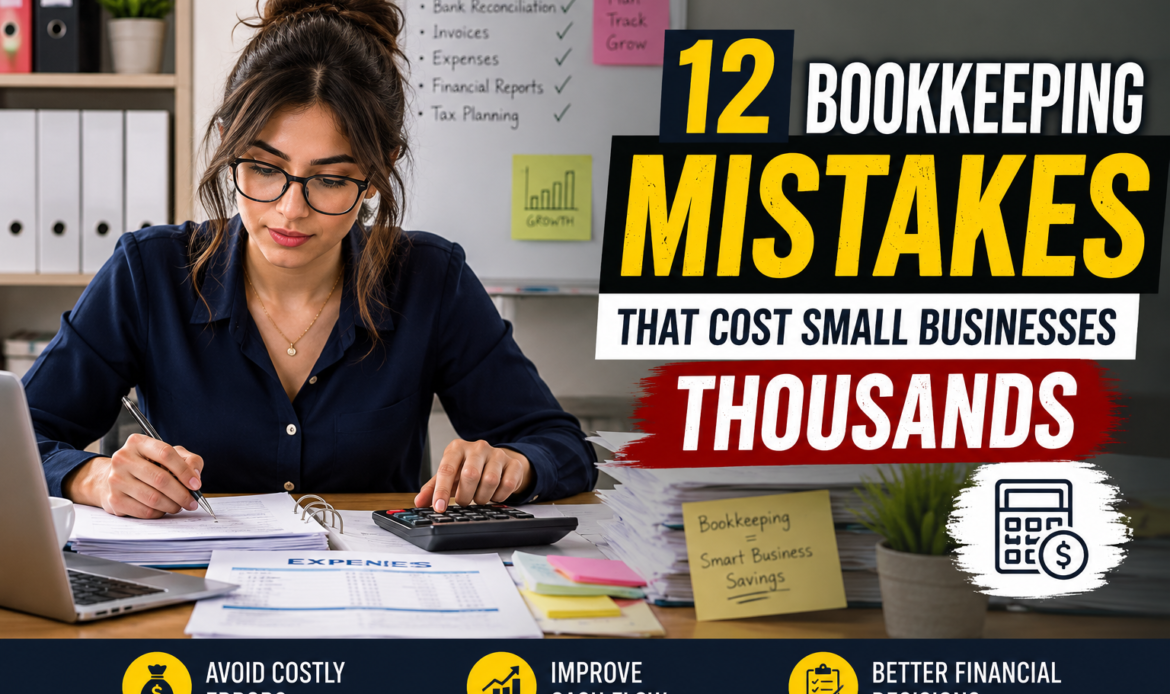
Small-scale business owners can be thrilling; however, managing their finances can prove challenging. Most business owners are focused on marketing, sales, and customer service, but neglect one crucial task:
Small bookkeeping errors can lead to cash flow issues,
tax issues,
missed business opportunities,
and incorrect financial reports.
The good thing is that these errors can be avoided if you are aware of the signs to look out for.
In this article, you’ll discover the most frequent bookkeeping errors that cause small businesses to lose thousands of dollars, and the best way to avoid these mistakes.
Why Good Bookkeeping Matters
Bookkeeping is more than just recording expenses and income. It assists you in:
- Learn to understand your business’s performance
- Make better financial decisions
- Prepare accurate tax returns
- Increase cash flow
- Avoid costly errors
- Establish trust with lenders and investors
Keeping your books organized can save you time, as well as cash.
12 Bookkeeping Mistakes That Cost Small Businesses Thousands
1. Mixing Personal and Business Finances
Utilizing the same account for business and personal expenses confuses. This makes tax filing a lot more difficult.
Tip: Create a separate account for business banking and a business credit card.
2. Recording Every Expense
It’s easy to think that small purchases aren’t important; however, they can add up over time. The absence of expenses can lower the tax deductions you receive and provide you with a false financial report.
Tip: Keep track of each business expense, however small.
3. Waiting Too Long to Update Your Books
A majority of business owners only change their records every tax time. This is often the cause of missing receipts or transactions that are not recorded.
Tips: Make sure you are updating your bookkeeping each week.
4. Ignoring Bank Reconciliation
If your bank statements do not coincide with your accounts, then mistakes or Fraud can be missed.
Tip: Consolidate your bank accounts each month.
5. Misclassifying Expenses
Incorrectly placing expenses in the right category results in inaccurate reporting and could result in tax problems.
Tips: Make sure you use clear expense categories or dependable bookkeeping software.
6. Forgetting to Track Invoices
Unpaid or late invoices can severely impact the flow of cash.
Tips: Make invoices available promptly and then follow up on overdue payments.
7. Common Bookkeeping Mistakes That Hurt Cash Flow
A business that is profitable can have cash shortages in the event that money is not managed correctly.
TIP: Examine your cash flow frequently and prepare for future costs.
8. Losing Receipts and Financial Documents
If you don’t have the proper documentation, in the absence of proper records, claiming business deductions is difficult during tax time.
Tip: Save receipts electronically with cloud storage or bookkeeping applications.
9. Missing Tax Deadlines
Late tax payments can cause penalties and stress.
Tips: Make sure to keep your tax calendar, which includes important deadlines for filing and reminders.
10. Doing Everything Manually
Manual bookkeeping can increase the risk of error in calculations and also takes precious time.
Tips: Use reputable software for bookkeeping to automate the routine tasks.
11. Not Reviewing Financial Reports
A lot of owners do not take a look at their profit and loss Statements or the Balance Sheet.
These reports can help you figure out whether your company is growing or losing money.
Tips: Check your financial reports each month.
12. Trying to Do Everything Alone
As your business expands, the bookkeeping process becomes more complicated. Doing it all yourself could result in costly mistakes.
Tips: Think about hiring an experienced bookkeeper or accountant whenever you need.
Quick Summary of Bookkeeping Mistakes
| Bookkeeping Mistake | Possible Cost | Best Solution |
| Mixing personal and business finances | Tax issues and confusion | Use separate business accounts |
| Not recording every expense | Missed tax deductions | Record every expense |
| Delaying bookkeeping | Inaccurate financial records | Update books weekly |
| Skipping bank reconciliation | Errors and fraud | Reconcile accounts monthly |
| Misclassifying expenses | Incorrect financial reports | Categorize expenses correctly |
| Not tracking invoices | Cash flow problems | Monitor invoices regularly |
| Ignoring cash flow | Financial shortages | Review cash flow monthly |
| Losing receipts | Missed deductions | Store receipts digitally |
| Missing tax deadlines | Penalties and interest | Set reminders |
| Manual bookkeeping | Human errors | Use bookkeeping software |
| Not reviewing reports | Poor financial decisions | Review reports monthly |
| Managing everything alone | Costly mistakes | Hire a bookkeeping professional |
Best Practices for Better Bookkeeping
A few simple steps will make bookkeeping much simpler:
- Separate personal and business finances. Separate your personal and business finances.
- Make sure you are updating your books each week.
- Consolidate bank accounts on a monthly basis.
- Keep digital copies of receipts.
- Use reliable bookkeeping software.
- Examine financial reports on a regular basis.
- Make sure you are prepared for tax deadlines.
- Consult a professional as your business expands.
These simple habits can help avoid expensive financial troubles in the future.
Frequently Asked Questions
1. Is there a most frequent accounting error?
Combining personal and corporate finances is among the most frequent mistakes in bookkeeping committed by small-business owners.
2. What is the best time to refresh my bookkeeping?
The practice of updating your books every week is the best option. It ensures your records are up-to-date and helps ease stress during tax time.
3. Does software for bookkeeping substitute for an accountant?
Bookkeeping software can help automate everyday tasks, but accountants can still offer expert guidance on taxes, compliance, and financial planning.
4. Why is it important to have bank reconciliation?
It assists in identifying errors in transactions, missing transactions, duplicate entries, and even Fraud before they become significant issues.
5. What happens if my bookkeeping information is in error?
Inadequate bookkeeping could lead to inaccurate financial reports, cash flow problems, and poor business decisions.
6. Should small businesses employ an accountant?
If your finances become hard to manage or your company is expanding rapidly, employing an experienced bookkeeper will help you save time and avoid the chance of costly mistakes.
Final Thoughts
Bookkeeping that is organized and efficient is one of the fundamentals of running a successful business. Beware of these 12 common mistakes in bookkeeping. can save you money, boost the flow of cash, make more informed choices, and be prepared for tax time.
There is no need to be an accountant. If you keep accurate records, make use of the appropriate tools, and check your financials regularly, you can build an even more successful and profitable company.
Call to Action
Need help keeping your business’s finances in order? Begin reviewing your bookkeeping now and create accurate financial records as an absolute priority. Making small changes now could help your business save hundreds of thousands in the near future.